
Where to stay in Amed
Amed is not one place.
Choosing the right village changes everything.
A village-by-village guide to where to stay on Bali’s east coast — from the snorkeling bays to the quietest corners
Most travelers arrive in Amed without realizing it’s actually a string of nine villages stretched along fifteen kilometers of coastline. Each one has a different character, a different pace, a different relationship with the sea. Choosing where you sleep here is the most important decision of your trip — and this guide exists to help you make it well.
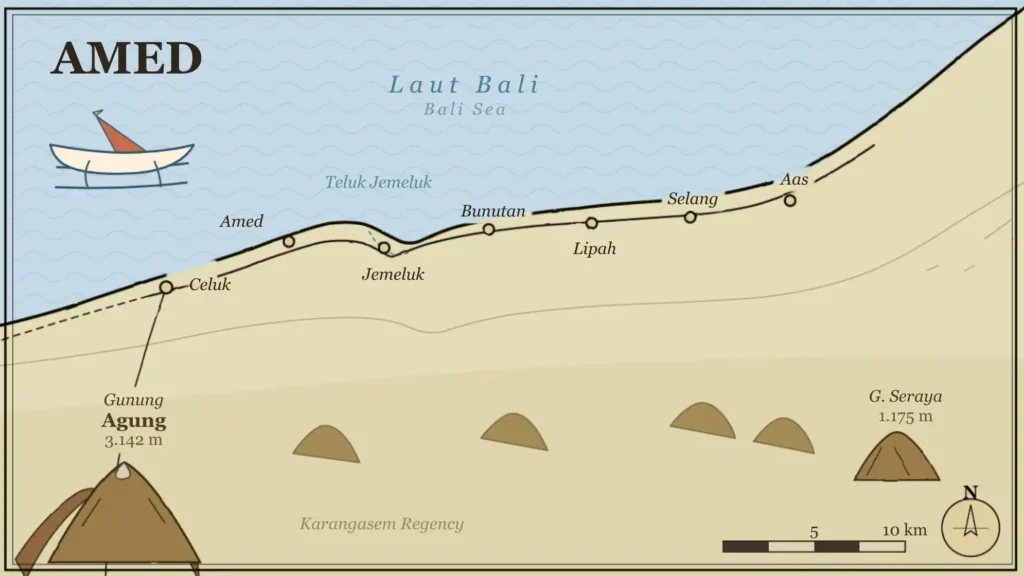
The Amed coast
Nine villages, one coastline
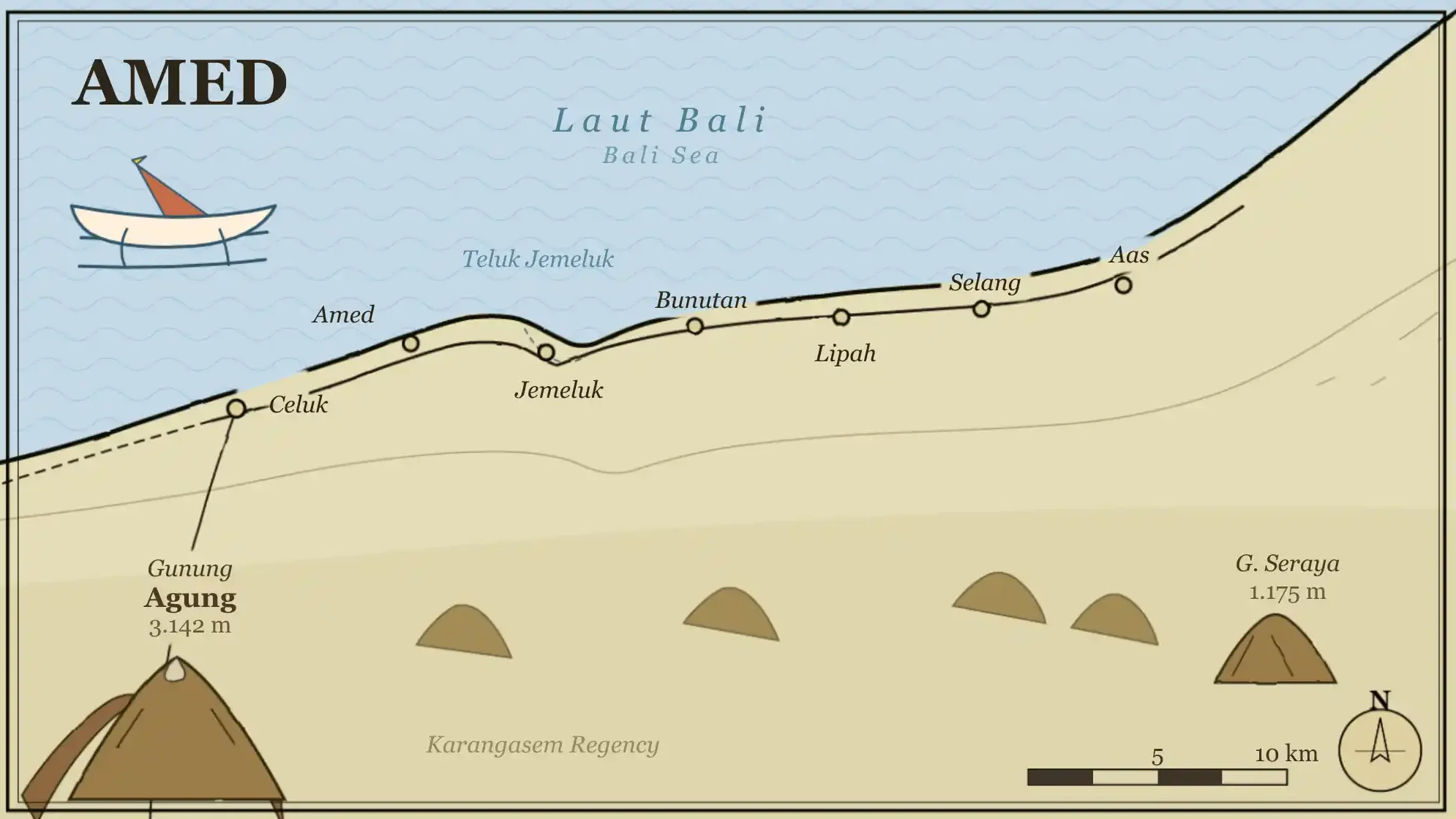
From Amed Bay in the north to Tulamben in the south, each village sits in a different bend of the coast — separated by headlands, connected by a single winding road.
Before you book
Why where you stay in Amed matters more than anywhere else in Bali
In Seminyak or Ubud, a bad accommodation choice is recoverable. You’re five minutes from a restaurant, ten minutes from a taxi, twenty minutes from everything else. In Amed it’s different. The road is narrow and winding. Some villages have two warungs; others have none. Moving between areas takes longer than you’d expect. And at night, when the road goes dark and the geckos take over, you are exactly where you chose to be — for better or for worse.
The good news is that Amed’s geography rewards the traveler who reads it carefully. Each village along this fifteen-kilometer coast has its own character — its own relationship to the water, its own mix of local and international, its own version of quiet. Some are made for snorkelers. Others suit divers who want dawn entries at the wreck. A few are simply the kind of places where you arrive for two nights and stay for two weeks without quite knowing why.
This guide covers all nine villages in the order you encounter them traveling south from the main road. Read it end to end, or jump to the area that matches what you’re looking for.
The best place to stay in Amed is the one that fits how slowly you’re willing to move.
Village by village
The Amed coast, from north to south
Amed Bay
The center of gravity — busy by Amed standards, still quiet by Bali’s
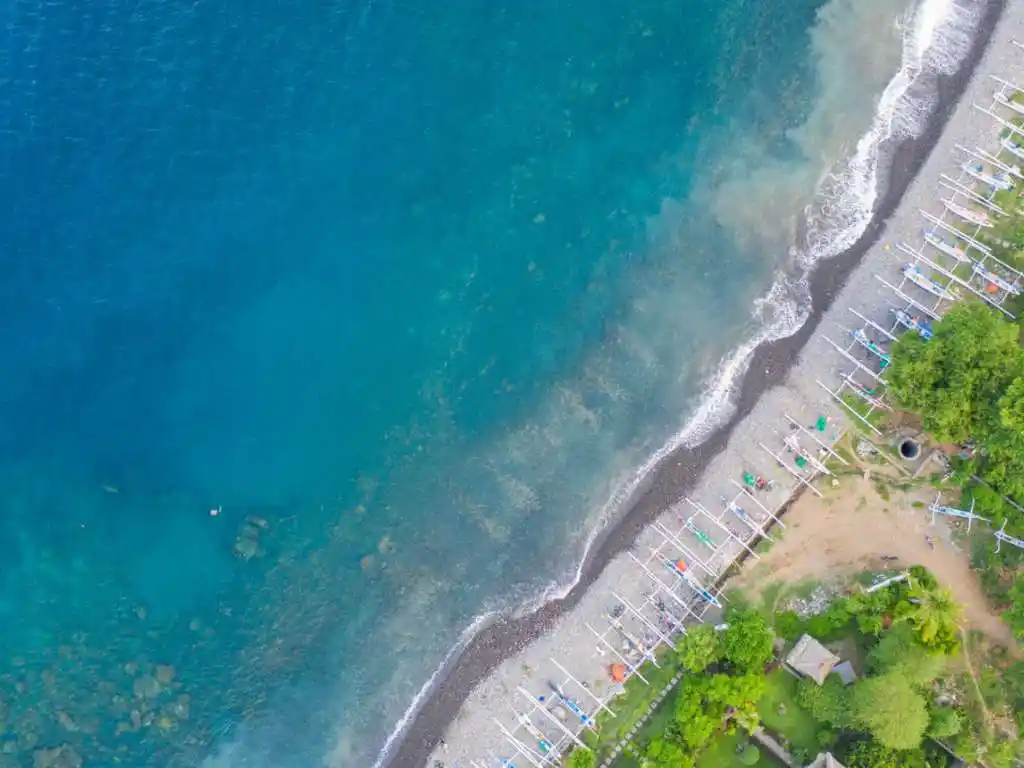
Amed Bay is the first village you reach and the one that gives the entire coast its name. It’s the most developed area — a handful of dive shops, the most restaurant options, and the widest range of accommodation from budget guesthouses to small boutique hotels. The beach is black volcanic sand, and the view across the bay toward Mount Agung is extraordinary in the early morning. The snorkeling directly offshore is accessible enough for beginners.
Stay in Amed Bay if you want convenience — if you’re arriving without a clear plan, want to be close to dive operators, or prefer having a few dinner options without getting on a scooter. It’s the right base for a short first visit. For longer stays or a quieter atmosphere, the villages further south offer more.
Jemeluk
The bay that stops people in their tracks — the most photogenic stretch of the coast
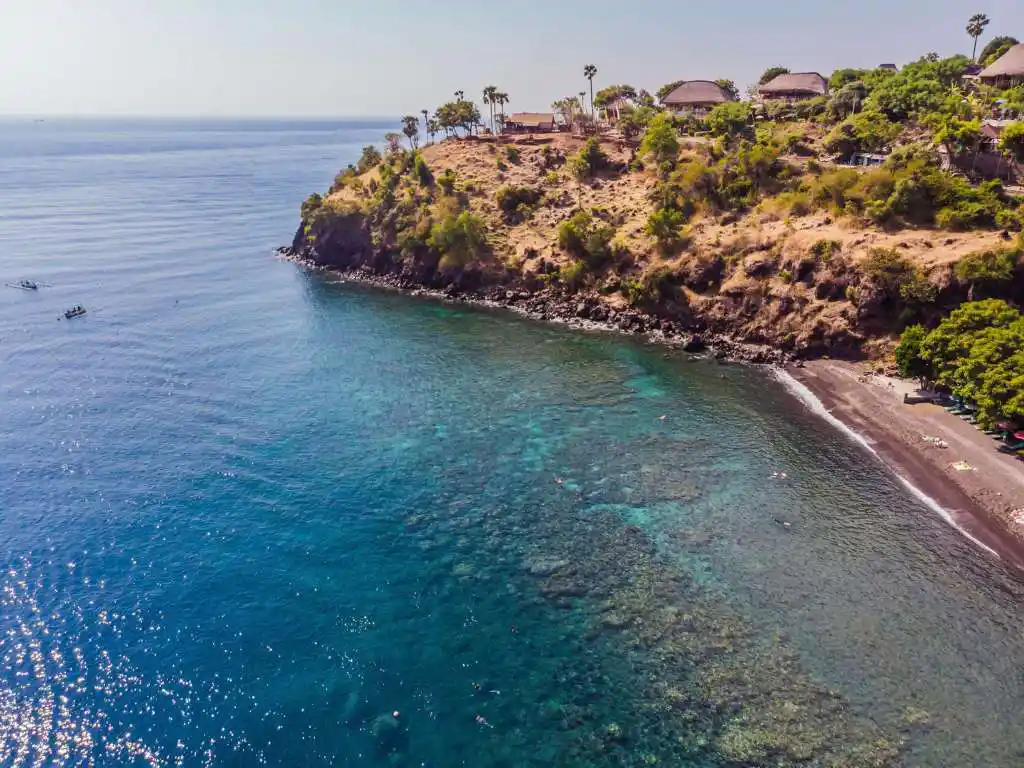
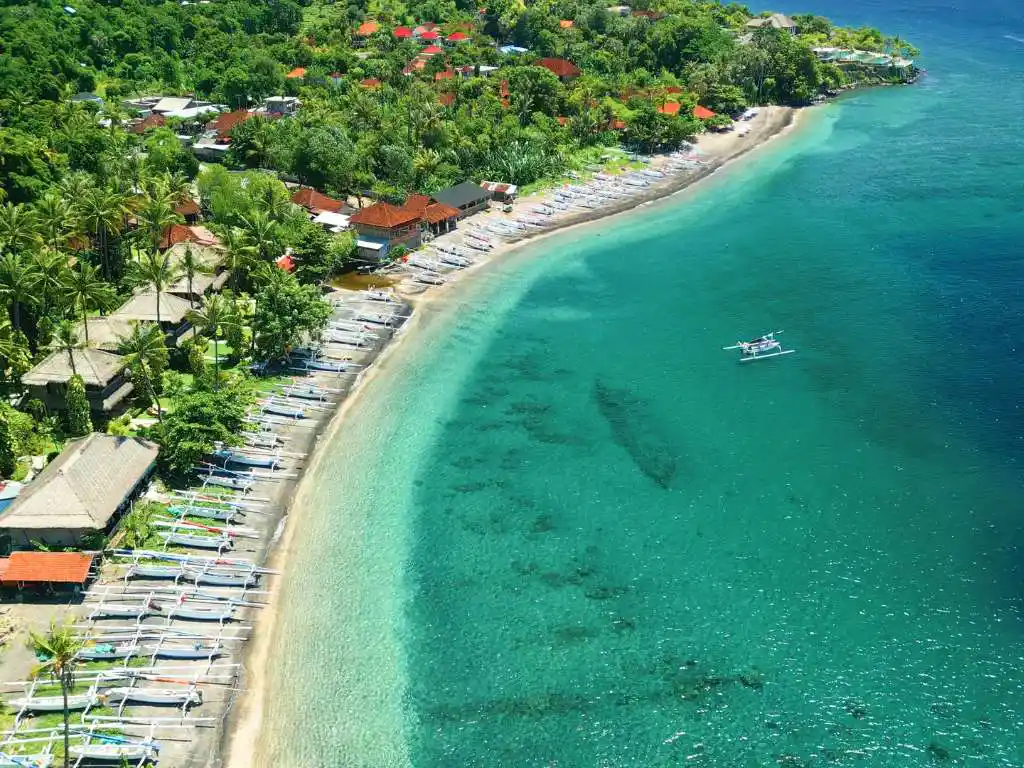
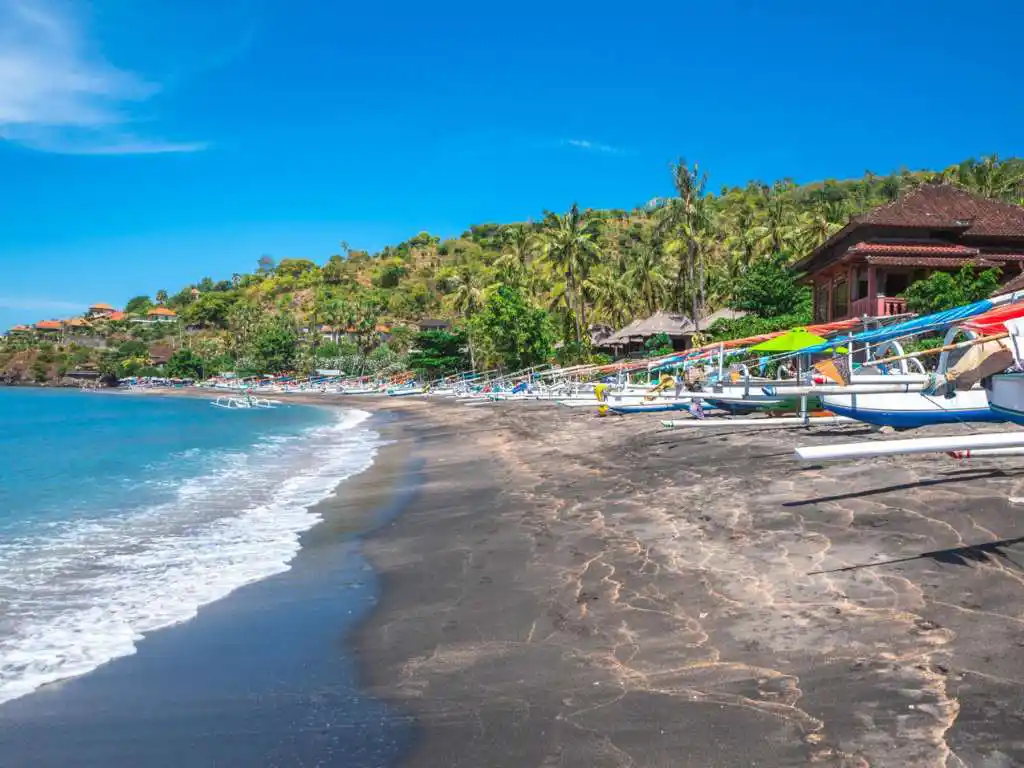
Jemeluk is where the coast opens into a wide protected bay. The combination of clear shallow water, traditional jukung fishing boats moored offshore and green hills behind it produces a view that feels almost too composed to be real. It’s a short drive from Amed Bay but noticeably quieter — the road narrows, the restaurants thin out, and the pace drops another gear.
The snorkeling in Jemeluk Bay is some of the best on the coast — there’s an underwater temple and healthy coral accessible within a short swim from the beach. Several accommodation options are positioned directly above the bay, offering morning views that justify any price difference. If you’re choosing between Amed Bay and Jemeluk, the bay wins on atmosphere every time. It just requires a scooter or a willingness to walk for dinner.
Bunutan
Hillside, local, understated — a village that rarely appears on shortlists and should appear on more
Bunutan sits on the hillside between Jemeluk and the villages to the south, and its terrain is different from the beachside stops — the road climbs here, the sea appears below rather than beside you, and the accommodation options tend to be small guesthouses and family-run bungalows rather than beach hotels. It’s almost entirely local: a few warungs, a temple, children on scooters after school.
Staying in Bunutan makes sense if you want a genuinely local experience and don’t need to be on the beach — some of the hillside properties have views that are more dramatic than anything you’d find at sea level. You need a scooter here. That’s not a drawback; it’s the point.
Lean
A small pause between villages — fishing community, minimal infrastructure, genuine quiet
Lean is barely a village in the tourist sense — it’s a small fishing community with a beach lined with jukung boats and a life that has almost nothing to do with visitors. There’s very little accommodation infrastructure here, which means the few guesthouses that exist operate almost like private homestays: small, personal, run by families who live next door.
If you want to spend a few nights as the only foreigner on the beach, where no one is trying to rent you snorkel gear, and where the loudest thing at dawn is roosters rather than dive boats — Lean is worth considering. Come with low expectations for amenities and an openness to improvising your meals.
Lipah
The favorite of long-stay travelers — enough infrastructure, enough silence, close to the water
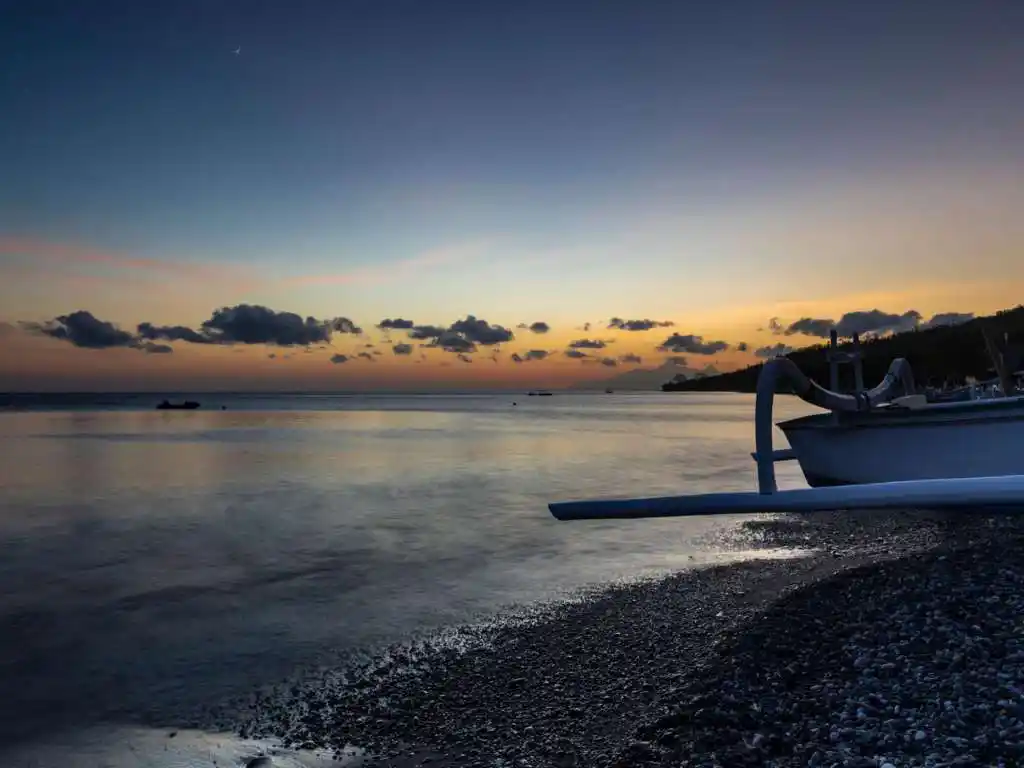
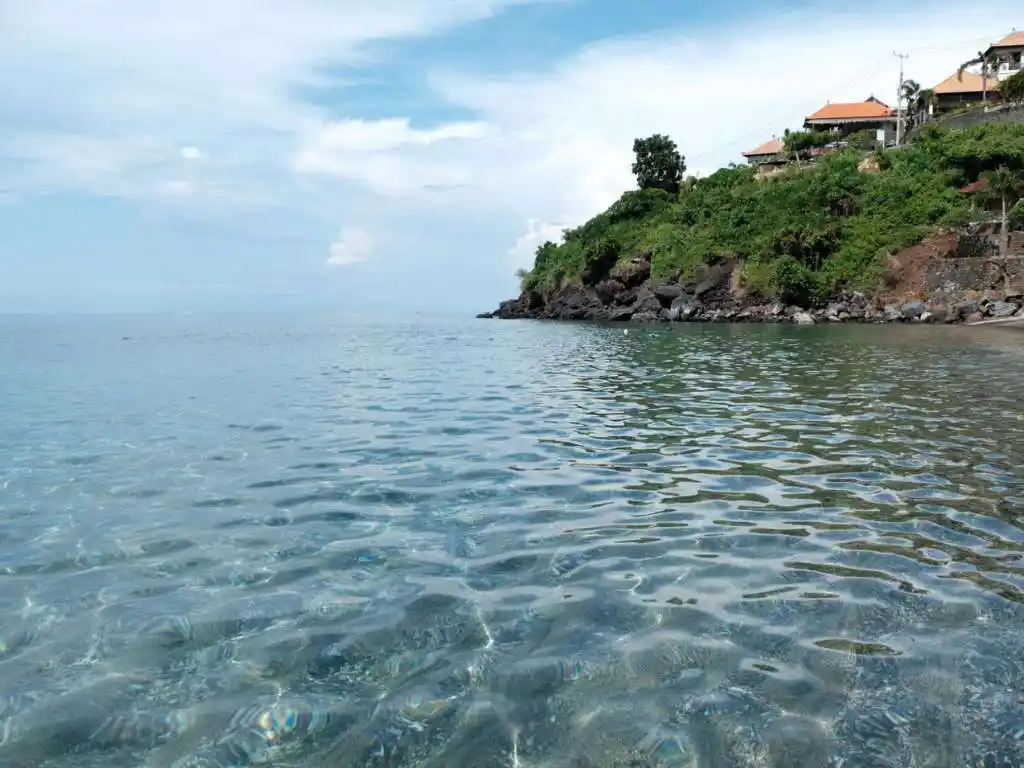
Lipah has quietly become the preferred base for travelers who stay in Amed for more than a week. It sits roughly in the middle of the coast, which gives it decent access to the dive sites to the south and the restaurants of Amed Bay to the north without being either. The beach is calm, there are a few good warungs, and the community has a gentleness to it that longer stays reveal slowly.
Several of the most considered boutique villas and small hotels on the coast are located in or just outside Lipah — places built by people who moved to Amed and stayed, who understand what the area offers and design their properties around it. If you’re planning a week or more, Lipah is worth prioritizing in your search.
Selang
The quiet end of the Amed coast — excellent for divers, exceptional for anyone who wants the road to stop here
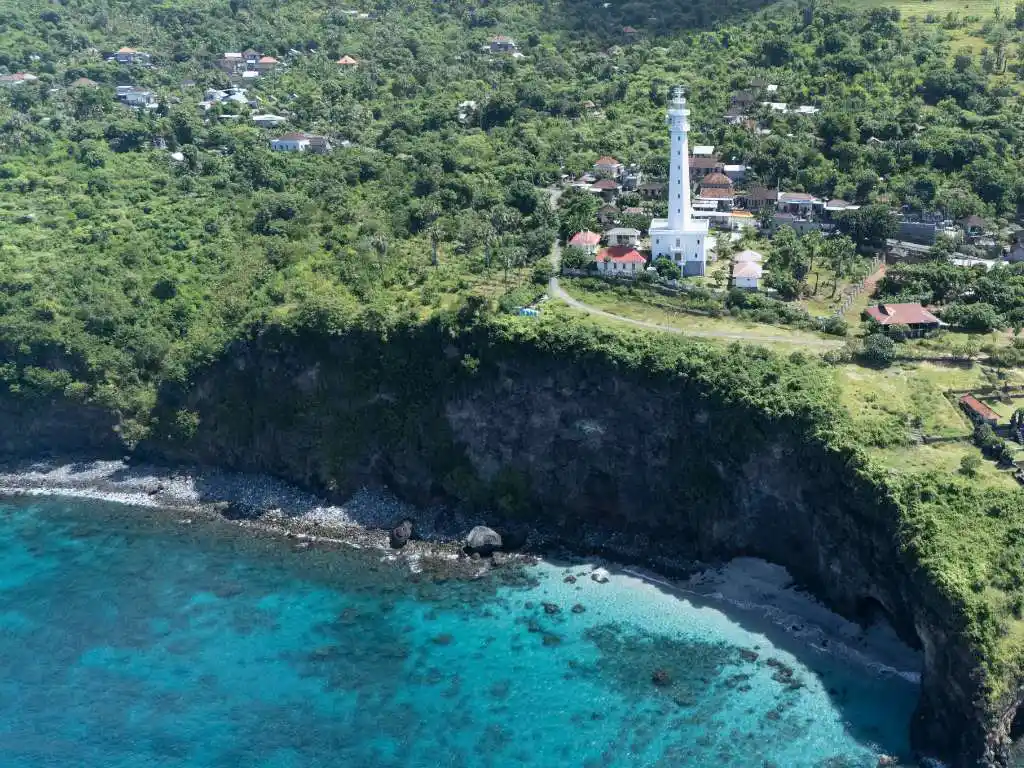
Selang is the southernmost village that most people consider part of the Amed coast proper, and it has the distinct atmosphere of a place that knows it’s at the end of the road. There are fewer tourists here than anywhere north of it, the diving directly offshore is considered among the best in the area, and the few accommodation options that exist tend toward the small and considered.
Staying in Selang means accepting a real level of distance from the rest of the coast — the road to Amed Bay is a twenty-minute scooter ride. In return you get a version of the east coast that feels almost untouched: evenings that are genuinely dark, water that is clear and quiet, and a pace of life that operates on its own schedule entirely.
Tuba
A fishing village with almost no tourist footprint — for travelers who want to disappear
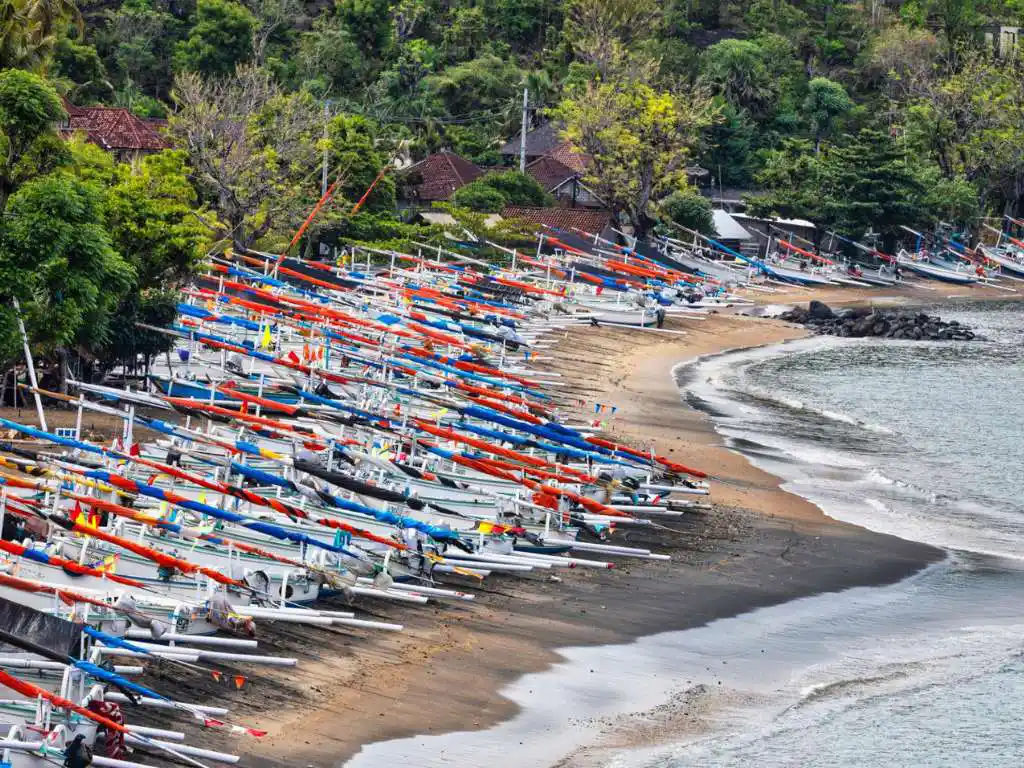
Tuba is a working fishing village that remains almost entirely outside the tourist circuit. There are no dive shops, no English-language menus, no tour operators. What there is: a beach covered in fishing boats, a community that goes about its days without much reference to visitors, and an extraordinary quiet in the evenings.
Accommodation in Tuba is minimal — a small number of homestays most easily found through local contacts rather than booking platforms. It’s not a place you stumble into; it’s a place you choose deliberately. For travelers who have been to Amed before and want to go further into the coast’s quieter half, Tuba is one of the answers.
Melasti
Between the Amed coast and Tulamben — a transitional stretch that rewards the traveler who slows down
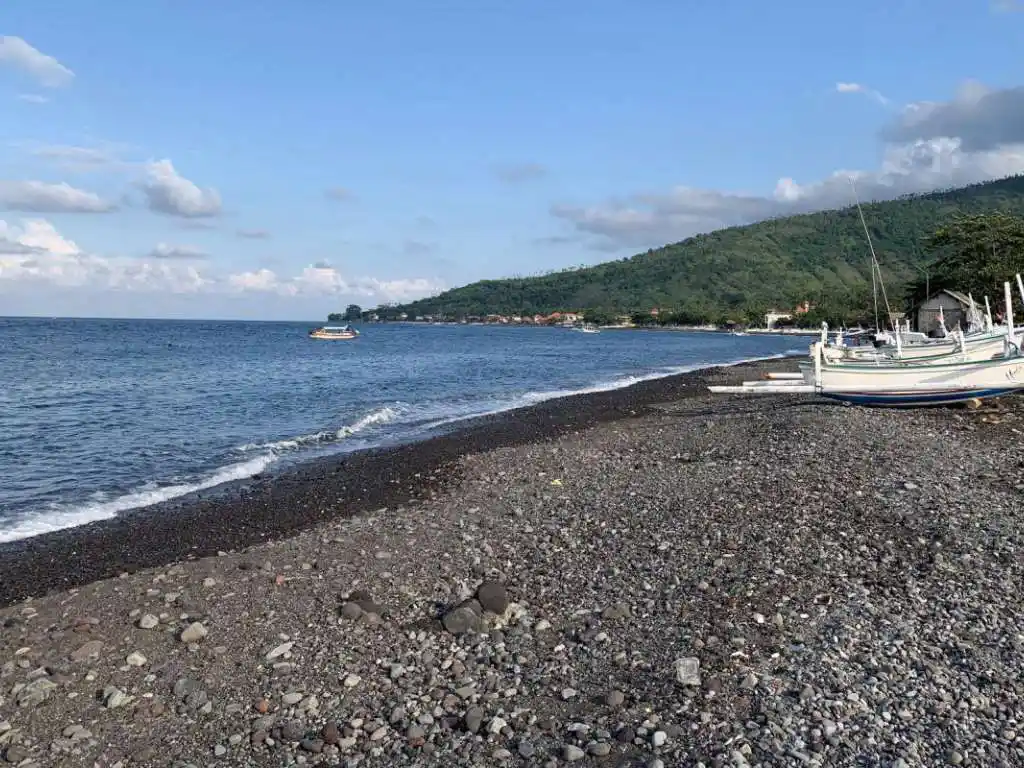
Melasti sits in the stretch of coast between the Amed villages and Tulamben, and it has the slightly ambiguous character of a place that belongs to both and to neither. The mountains press closer to the road, the coast becomes more rugged, and the sense of being in a different, older Bali deepens here.
A small number of properties have chosen to locate themselves here precisely because of that ambiguity — close enough to access the dive sites and restaurants of the Amed coast, removed enough to feel like a genuine retreat. It’s not a village to base yourself in for a first trip, but for a second visit when you know the coast and want something different, Melasti offers a perspective the more established villages don’t.
Tulamben
Beyond Amed proper — home to Bali’s most famous wreck dive, and a reason to stay at least one night
Tulamben is not technically part of the Amed coast — it sits about fifteen kilometers south, in a small bay defined almost entirely by one thing: the USS Liberty, an American cargo ship torpedoed in World War II that now rests in shallow water just meters from the beach, overgrown with coral and home to hundreds of species of marine life. It’s one of the most accessible wreck dives in the world.
Tulamben functions primarily as a dive destination — most accommodation is run by dive operators, and the rhythm of the village is set by entry times rather than sunrise. If you’re basing yourself in the Amed area, Tulamben makes an excellent day trip or one-night detour, especially if you dive. If the wreck is the primary reason you came to this part of Bali, staying in Tulamben itself makes more sense than commuting from Amed each morning.
Type of stay
What kind of place are you looking for?
Guesthouses & homestays
The backbone of Amed’s accommodation scene. Small, family-run, priced honestly. Usually a handful of rooms around a garden, breakfast included, and an owner who knows the coast better than any travel blog. Found in every village, and often the best way to stay here.
Boutique villas & small hotels
A growing number of considered properties — private pools, sea views, design that takes the landscape seriously. Concentrated around Jemeluk, Lipah and Selang. Priced higher but offering something genuinely different: the feeling of Amed without roughing it.
Dive resorts
Purpose-built for divers: early breakfasts, equipment storage, in-house instructors, multiple boat entries per day. Most are in Amed Bay or Tulamben. The right choice if diving is the primary reason you’re here and you want everything organized around it.
A few practical notes
Before you book anything
Get a scooter. Whatever village you choose, a scooter transforms your experience of the coast. The road between villages is manageable, the views from it are extraordinary, and the freedom to move between areas without negotiating transport changes everything. If you’ve never ridden one, Amed is actually one of the better places to learn — the roads are quiet and the terrain is forgiving outside the main villages.
Book early for peak season. The best small guesthouses and boutique properties fill up quickly in July, August and the Christmas–New Year period. The good news is that even during peak season Amed remains quieter than the south — but the specific properties worth staying in have limited rooms and limited flexibility.
Internet varies by area. Amed Bay and Jemeluk have reasonably reliable connections. Further south — Lipah, Selang, Tuba — it becomes more variable. If you’re working remotely, ask the property directly before booking rather than relying on listing descriptions.
The road ends at Tulamben. Technically it continues, but the east coast loop beyond Tulamben — past Singaraja and down through the rice terraces — is a different day’s journey, not something to fold into your Amed stay without planning for it.
Ready to plan your stay?
You know the coast. Now plan the rest.
Once you’ve chosen your village, the rest of your trip falls into place — how to get there, what to do, where to eat, how many days you actually need.