
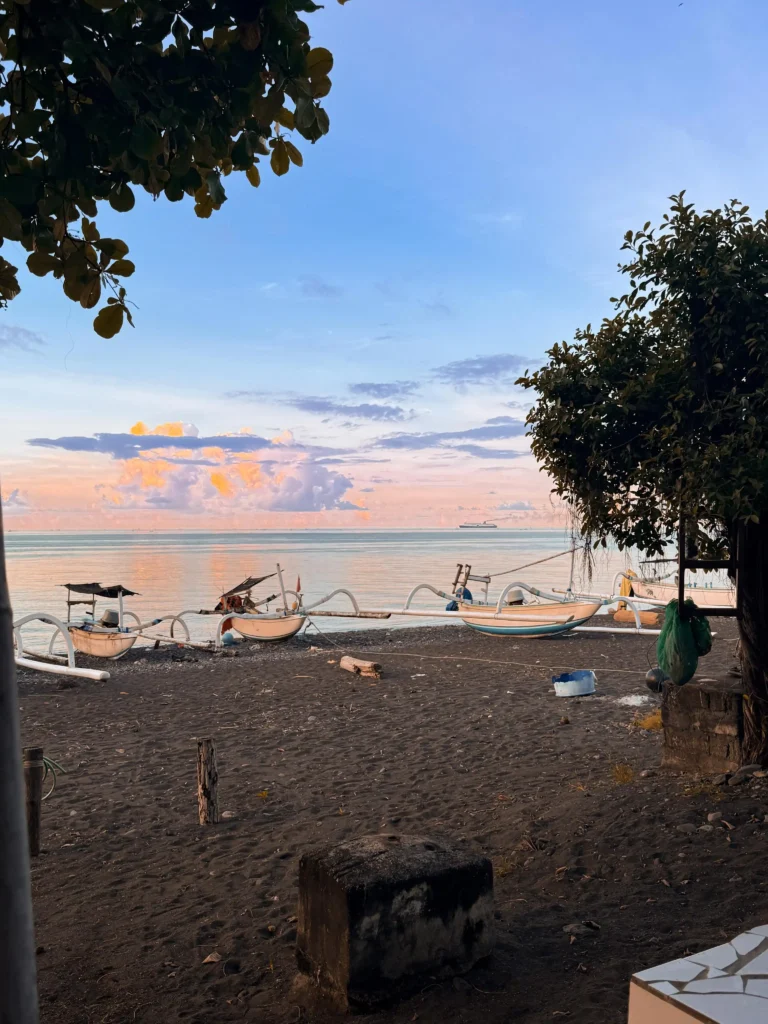
Long-Term Guide · East Bali
Living in Amed, Bali
What life is really like on Bali’s quiet east coast
Living in Amed means slow mornings by the sea, a simple daily rhythm, and being far from Bali’s busiest areas. But it also means limited infrastructure, fewer services, and a lifestyle that doesn’t work for everyone. This guide breaks down what it’s really like to live in Amed — so you can decide if it fits your way of traveling or living.
Quick Answer
Is Amed good for long-term living?
- Yes, if you’re looking for peace, nature, and a slower pace of life
- No, if you need variety, convenience, or an active social life
Amed works well for slow travelers, remote workers, and anyone looking to step away from mass tourism. But daily life here has real limitations — and being honest about them is the only way to know if it’s right for you.
What is Life in Amed Really Like?

Life in Amed is simple — and often repetitive. Days tend to follow a natural rhythm shaped by the ocean and the local community.
There are no beach clubs, no big resorts, and no nightlife scene. Instead, you’ll find quiet mornings instead of traffic, small local businesses instead of large chains, and a slower pace that doesn’t change much from one day to the next.
This is exactly what some people are looking for — and exactly what others find limiting after a while.
Cost of Living in Amed
Compared to areas like Canggu or Ubud, Amed is generally more affordable. The lower cost is one of the reasons it attracts long-term visitors and slow travelers.
Typical monthly expenses include:
- Accommodation — often with ocean views at low prices
- Scooter rental for getting around
- Local food at warungs and occasional cafés
- Utilities and basic services
Costs vary a lot depending on your lifestyle and expectations — especially how often you eat out, whether you rent long-term, and how much you travel beyond Amed.
Cost of Living in Amed
A full breakdown of what to budget for accommodation, food, transport, and daily life in East Bali.
Internet & Remote Work in Amed
Amed is attracting more remote workers — but it’s not a digital nomad hotspot.
What works:
- WiFi available in most accommodations
- A handful of cafés suitable for working
- Quiet environment that suits focused work
The limitations:
- Occasional outages, especially during rain
- Slower speeds than southern Bali
- No dedicated coworking infrastructure
Living in Amed with Kids
Amed can work very well for families — but only if you’re looking for a specific kind of lifestyle.
What works for families:
- Quiet and safe environment
- Nature-based daily life close to the ocean
- Slower routines that can suit young children
What can be challenging:
- Limited structured activities for children
- Fewer facilities compared to other areas of Bali
- Requires flexibility and willingness to adapt
Daily Life & Food in Amed
Daily life in Amed often revolves around simple routines shaped by the sea. Most days follow a similar pattern — and after a while, that rhythm becomes part of why people stay longer than planned.
- Breakfast with an ocean view at a local café or warung
- Working or relaxing during the quieter hours of the day
- Swimming or snorkeling in the afternoon
- Early dinners at beachside warungs as the light fades
Food options are varied but not overwhelming — mostly local Indonesian dishes, fresh fish, and a growing number of cafés with Western-friendly menus. The simplicity of what’s available shapes your daily routine more than you might expect.
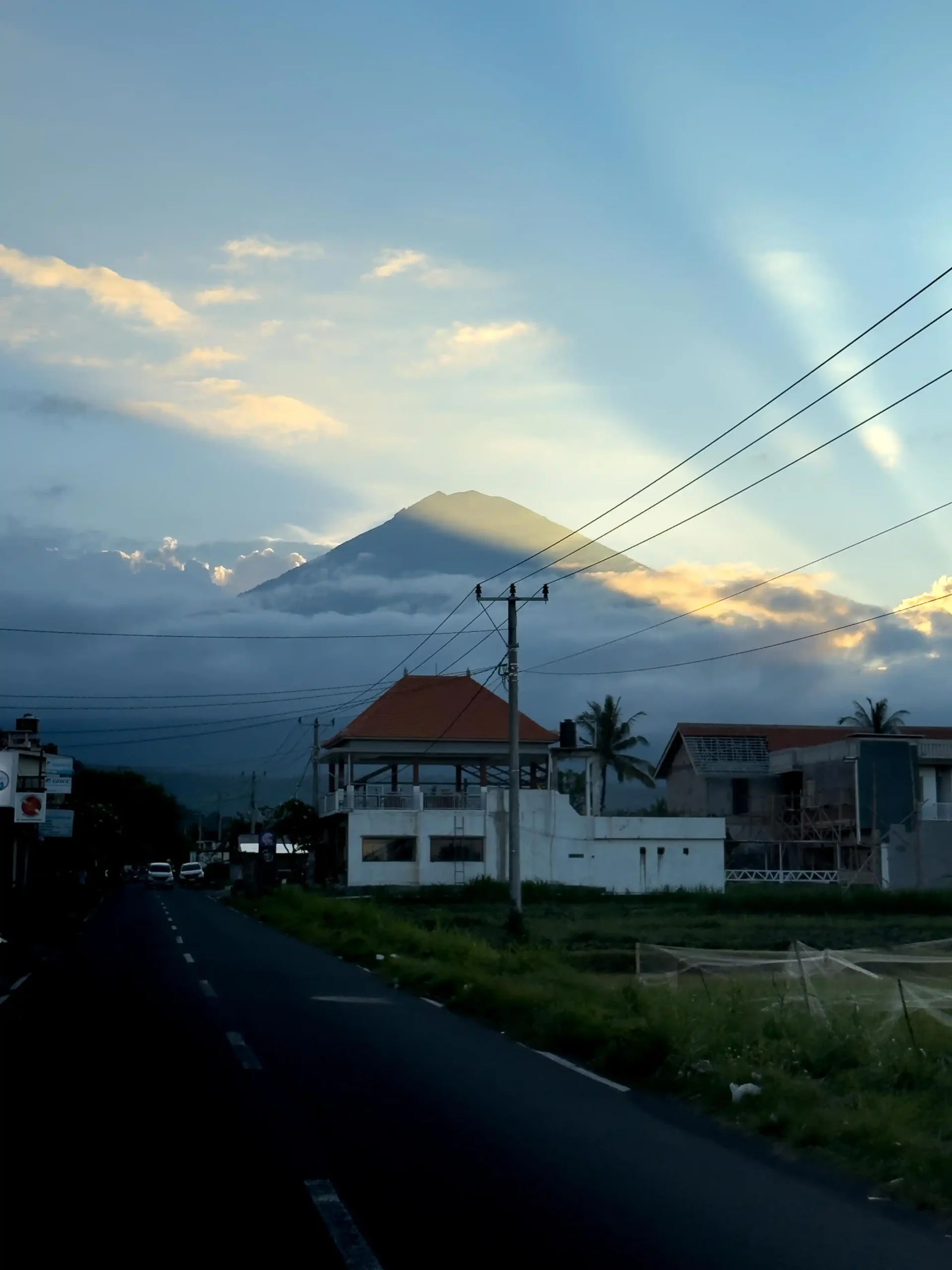
A Day in Amed
What a typical day looks like
- Sunrise with views of Mount Agung across the water
- Breakfast by the sea — coffee, fruit, a quiet table
- Work, snorkeling, or a slow morning walk along the coast
- A quiet afternoon with little noise and no crowds
- Sunset on a beach that’s often almost empty
It’s not about variety — it’s about rhythm.
Pros & Cons of Living in Amed
The honest trade-offs
What Amed gives you:
- Peace and space — no crowds, no noise
- Lower cost of living than most of Bali
- Direct access to the ocean every day
- An authentic, local atmosphere
What Amed asks in return:
- Limited infrastructure and services
- Very little nightlife or social scene
- Long distances from other parts of Bali
- Slower logistics — everything takes more planning
Who is Long-Term Amed for?
Amed works best for:
- Slow travelers who enjoy quiet places
- Remote workers who don’t need constant stimulation
- Families looking for a calm, nature-based environment
- Anyone comfortable with simple, repetitive routines
- People who want to experience local Bali life
Amed probably isn’t right if you:
- Need nightlife or a consistent social scene
- Want luxury infrastructure or convenience
- Rely heavily on coworking spaces or fast internet
- Get bored without variety and options
- Prefer to be close to other parts of the island
Explore the Guide
Everything you need to understand what living in Amed is actually like.
Cost of Living in Amed
What to budget for accommodation, food, transport, and daily expenses.
Internet & Remote Work
WiFi, cafés, speeds, and the reality of working remotely from East Bali.
Slow Living in Amed
What the slower rhythm of life actually feels like over days and weeks.
A Day in Amed
A realistic look at what an ordinary day in Amed looks like.
Amed with Kids
Is Amed a good fit for families? What works, and what to prepare for.
Amed vs Bali
A complete, honest look at what Amed gets right — and where it falls short.
The Reality Check
Living in Amed can feel like a dream at first. But daily life here has its limits — services can be slower than expected, options are fewer, and everything requires a little more planning.
Over time, this can feel freeing. Or it can feel restrictive. Which one it becomes depends entirely on what you came looking for.
Thinking about living in Amed?
Start with what matters most to you
Pick a starting point — the rest of life in Amed unfolds from there.