
Snorkeling in Amed, Bali
The 5 best snorkeling spots in Amed
A Japanese WWII shipwreck, an underwater Hindu temple, turtles, stingrays and some of the most accessible reef in Bali — all within a few kilometers of each other
Amed is one of the best snorkeling destinations in Bali — and one of the least crowded. The reef here starts directly at the shoreline in several spots, the water is clear, and the marine life ranges from coral gardens to historic wrecks. You don’t need to be a diver to experience it. This guide covers the five best snorkeling spots on the Amed coast, with honest notes on conditions, access and what to expect at each one.
Why snorkel in Amed
One of the best reefs in Bali — still largely to yourself
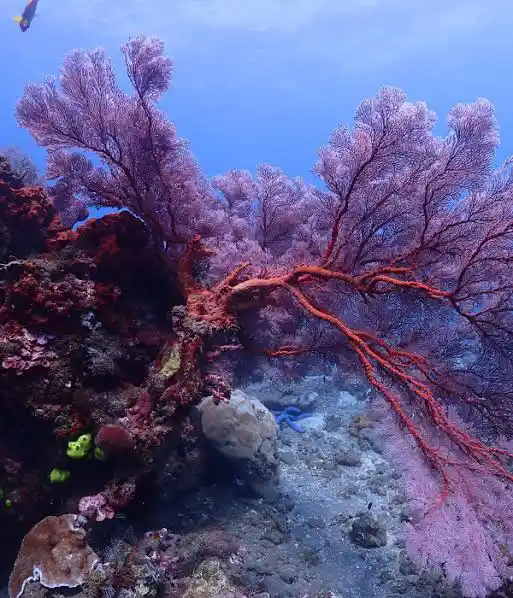
Most visitors to Bali snorkel in Nusa Penida or around the Gili Islands — and they’re good. But Amed offers something those spots rarely can: snorkeling directly from the beach, without a boat, in water that is often clear and calm, among fish and coral that haven’t been loved to death by overtourism.
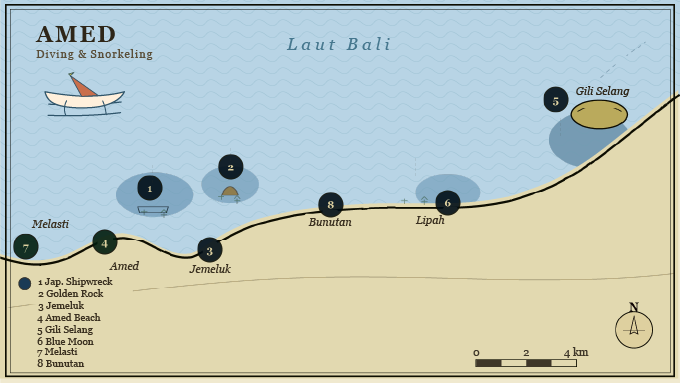
The coast has five distinct snorkeling spots, each with a different character. Jemeluk has the underwater temple. Banyuning has the Japanese shipwreck. Lipah is the quietest and easiest. Amed Beach is where the turtles are. Selang has the biggest reef. You could visit all five in two days — or spend a week slowly working through them.
Before you get in
What to know before snorkeling in Amed
Best time to go
April to October is the dry season and offers the best visibility and calmest conditions. Morning is almost always better than afternoon — the sea tends to get choppier after midday, especially at more exposed spots like Selang. Avoid the water in rough weather: during the wet season (November to March) conditions can deteriorate quickly, particularly at the southern end of the coast.
Gear and access
Most beaches in Amed are covered in black volcanic rocks or coarse pebbles — reef shoes or fins make entry and exit much easier. Snorkel gear can be rented cheaply from warungs and dive shops along the coast. Bring your own if you’re particular about mask fit. Most warung owners will watch your bags while you swim if you order something before or after — a custom worth maintaining.
Reef etiquette
Amed’s reef is genuinely healthy — keep it that way. Never stand on, touch or kick the coral. If you’re nervous about your fins, keep your feet up and float over shallow areas. Use reef-safe sunscreen only. Do not touch the turtles — they are present at Amed Beach and Selang, and they will swim away if approached. The reef here has survived largely because visitors have treated it with care.
The five spots
The best snorkeling in Amed, spot by spot
Spot 01 — Banyuning village
Japanese Shipwreck
The most dramatic snorkeling spot on the coast — a real WWII wreck you can reach without diving
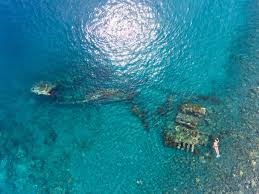
Off the beach in the quiet fishing village of Banyuning — a few kilometers from the main Amed strip — a Japanese WWII cargo vessel lies in shallow water, roughly 30 meters from the shore. Two black buoys floating above the wreck make it easy to find from the surface. The wreck is shallow enough to explore by snorkel, though it also attracts divers and the water around it can get busy during peak hours.
The wreck itself is heavily colonized by coral and home to an extraordinary variety of fish. Best accessed through Astungkara Warung, where the owner will happily watch your bags — just bring him some business before you leave. Go early morning for the clearest water and fewest other swimmers. The beach is rocky, so fins are strongly recommended for entry and exit.
Spot 02 — Jemeluk
Jemeluk Bay — Underwater Temple
An underwater Hindu temple, Indonesia’s first underwater post box, and a reef that starts at the water’s edge
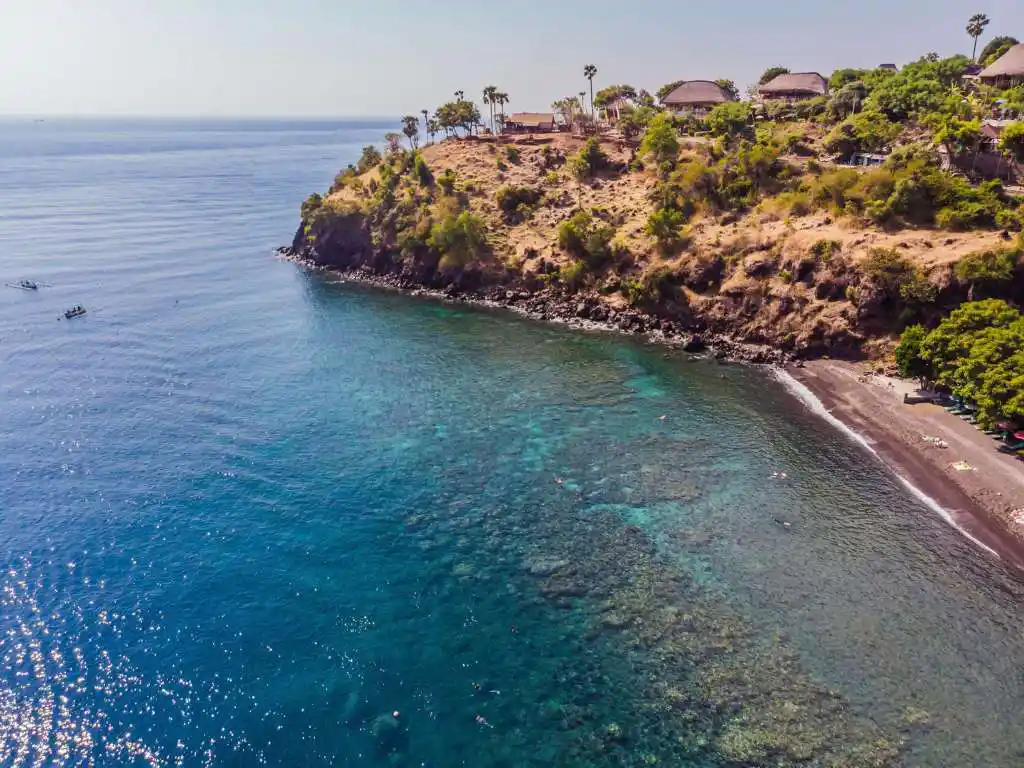
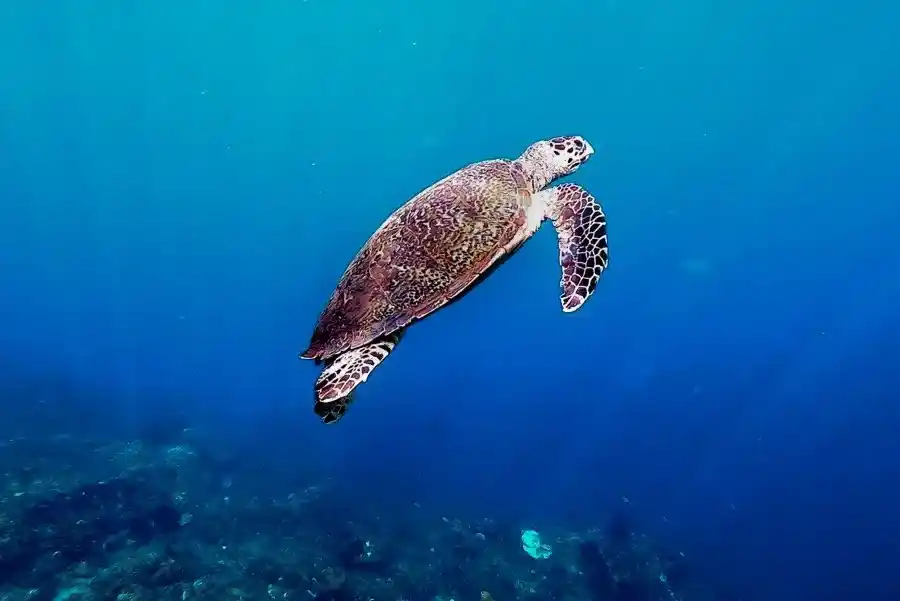
Jemeluk Bay is the most beginner-friendly snorkeling spot on the Amed coast. A small Hindu temple was submerged in the bay to raise awareness of marine conservation — it now sits on the seafloor surrounded by coral and fish, alongside Indonesia’s first underwater post box. A white PVC tube on the far right side of the bay marks the exact location. The reef begins directly at the shoreline — no long swim required to reach good coral.
The bay is sheltered and usually calm — ideal for children and less confident swimmers. Ombak Warung on the beach offers sun beds and wifi if you order from them. Be aware of boat traffic: Jemeluk is a working bay and local boats pass through regularly.
Spot 03 — Lipah
Lipah Beach
Stingrays, coral mountains, almost nobody else in the water — and one of the only rock-free beaches in Amed
Lipah is the quiet one. It doesn’t have the famous wreck or the underwater temple, but it consistently delivers some of the best underwater encounters on the coast — including stingrays gliding along the seafloor, oversized fish moving through towers of coral. Blue block buoys mark the particularly rewarding areas. There’s no need to go deep — the coral mountains are most impressive in the shallower zones.
What makes Lipah stand out above the waterline: it’s one of the very few beaches in Amed that isn’t covered in rocks. The black sand is fine and sparkly, entry and exit are easy. Pondok Vienna Beach restaurant is the most convenient access point — order something when you’re done and they’ll keep an eye on your bags.
Spot 04 — Amed village
Amed Beach — Turtle Point
Mount Agung from the water, turtles on the ocean floor and a dramatic drop-off at the back of the reef
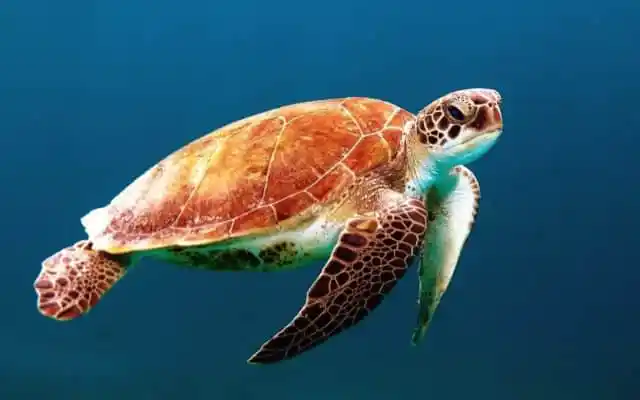
Amed Beach offers two things no other spot can match: the most dramatic view of Mount Agung from the water and the best chance of seeing sea turtles while snorkeling. Turtle Point is located directly opposite the Baracuda Hotel; turtles tend to rest on the sandy floor near the reef drop-off. They can be well-camouflaged — patience and good visibility help. On cloudy days they’re much harder to spot.
The reef has a large drop-off at the back, which creates dramatic changes in depth. There is a noticeable current along this stretch — always swim with a companion. The beach is rocky (Warung Pyramid out front has deck chairs and shade), and entry takes some care. The reward: the most biologically varied reef on the coast.
Spot 05 — Selang
Selang Beach
The largest reef on the Amed coast — less protected, better for confident swimmers, and the only spot where a turtle came close
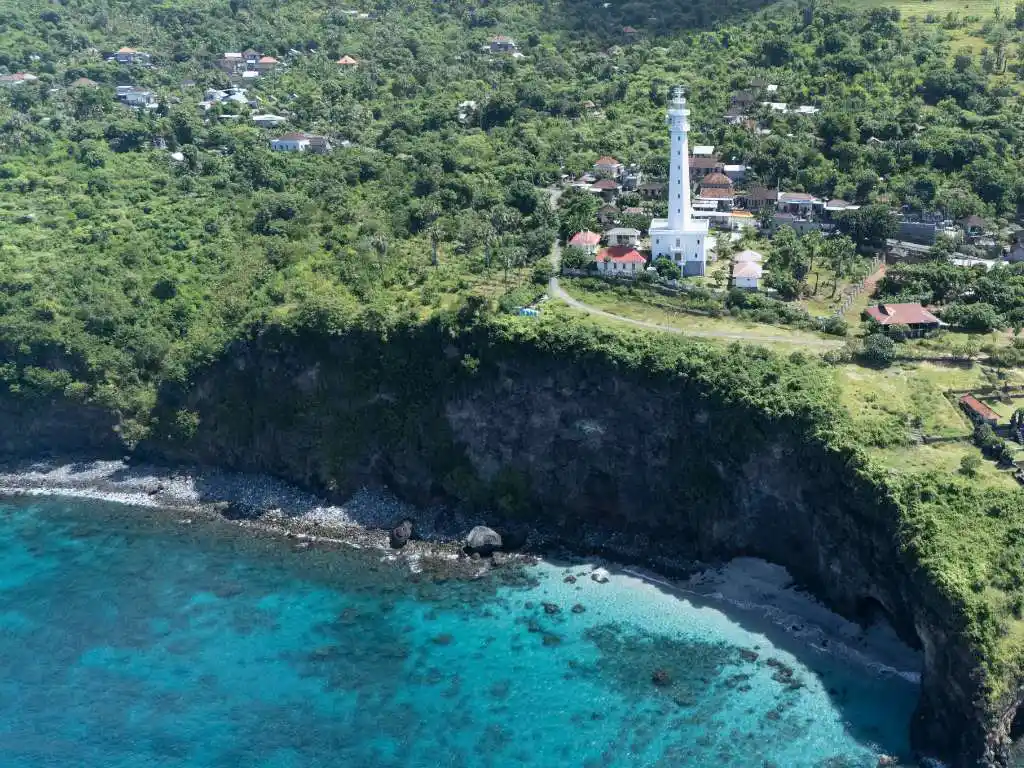
Selang has the most extensive reef of any snorkeling spot on the coast, sitting at the quiet southern end of Amed — fewer tourists, more exposed water. Access is via cliff stairs from the resorts perched above the beach; most properties along this stretch have their own steps down to the water.
The sea at Selang is less protected than at Jemeluk or Lipah — conditions can get choppy, especially in the afternoon. This spot is better suited to confident, experienced swimmers. It’s worth the effort: Selang is the only spot on the Amed coast where a turtle has been known to approach at close range, curious rather than fleeing. A rare and memorable encounter when it happens.
Going with a guide
Do you need a guide for snorkeling in Amed?
For most spots, no. Jemeluk, Lipah and the Japanese Shipwreck are all easy to access independently — the locations are well-known, the water is generally calm, and a rented mask and fins are all you need. Most warung owners can point you to the best entry point and give you a quick briefing on conditions.
For Amed Beach (Turtle Point) and Selang, a local guide or at least a companion is advisable — the current at Amed Beach can be strong, and knowing where exactly to look for turtles makes the difference between a frustrating and a memorable session. Many dive operators along the coast offer snorkeling trips that combine two or three spots in a single morning, which is a good option if you want to see the most ground efficiently.
The Japanese Shipwreck in particular is worth considering as a guided boat tour if you want to go at dawn, before other visitors arrive and when the fish around the wreck are most active.
Plan your time in Amed
The reef is the reason to come. The rest makes you stay.
Two or three days is enough to visit all five spots. A week means you can do each one twice — morning light, different tides, a completely different experience.