
East Bali · Honest Guide
Is Amed Worth It?
The honest answer — for travelers, slow travelers, remote workers, and anyone thinking about staying longer
Amed is remote, limited, and far from everything familiar. It also has some of the clearest water in Bali, almost no traffic, very low prices, and a pace of life that people travel across the island specifically to find. So — is it worth it? That depends entirely on what you’re actually after.
People ask this question before they come to Amed.
Is it worth the drive? Is it worth being so far from everything? Is it worth choosing somewhere with no supermarket, no international hospital, no beach clubs, no real nightlife — when Bali has all of that, just not here?
The honest answer is: yes. But not for everyone. And the difference between the people who leave Amed thinking it was the best decision they made in Bali, and the people who leave after three days feeling like they made a mistake — that difference is almost always about expectations, not about Amed itself.
So before asking whether Amed is worth it, it’s worth asking worth it compared to what. And worth it for whom.
What Amed Actually Is
A fishing village on East Bali’s volcanic coast that never became something else
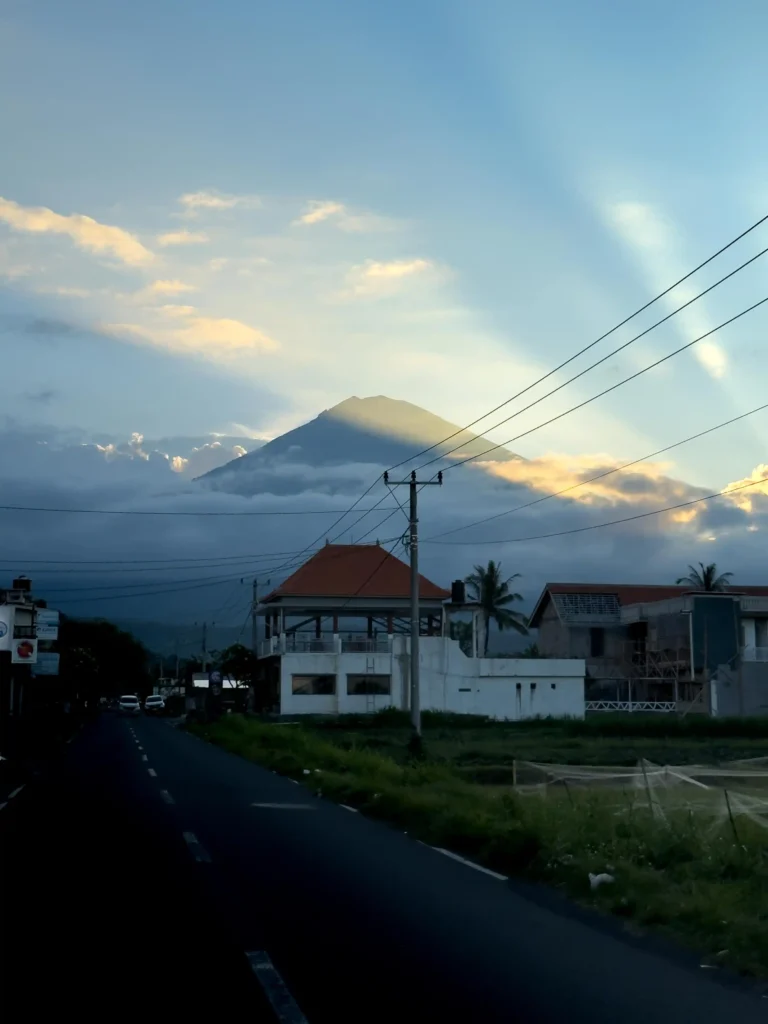
Amed sits on the northeast coast of Bali, more than three hours from the airport, past Ubud, past Singaraja, down a road that follows the mountains until the sea appears below. It’s a stretch of small villages — Amed, Jemeluk, Bunutan, Lipah — that share a coastline of black volcanic sand, an extraordinary coral reef, and the kind of daily rhythm that the south of Bali left behind a long time ago.
There are no traffic jams here. No beach clubs competing for attention. No digital nomad cafés with queues at the door. No luxury mall, no fast delivery, no imported products appearing the next morning.
What there is: the ocean, the mountains, the morning light, and a community — both local and expat — that understands what it chose when it chose this place.
Amed is not a lesser version of Bali. It’s a different version entirely. And whether that version is worth it to you starts with understanding exactly what it offers — and what it asks in return.
The Case For Yes
Why people come to Amed and don’t want to leave
The water. Amed’s coral reef is one of the best-preserved in Bali. The sea is calm, clear, and walkable from almost every accommodation. You can snorkel before breakfast without booking anything, without hiring a boat, without planning. For divers, the area includes access to the USAT Liberty wreck in nearby Tulamben — one of the most famous dive sites in Southeast Asia. If the ocean is why you came to Bali, Amed delivers in a way that most of the island simply doesn’t.
The pace. Slow living in Amed isn’t a concept you have to work toward. It’s the default. Days organise themselves around simple things — the sea, meals, light. There’s no social pressure around productivity, no calendar of events to keep up with, no ambient noise of a place that never stops. For people arriving from southern Bali — or from months of constant movement — that stillness lands like something they didn’t know they needed.
The cost. Amed is still genuinely affordable. Accommodation with ocean views, local food, daily life — all significantly cheaper than Canggu, Ubud, or Seminyak. For slow travelers and remote workers trying to extend their time in Bali without burning through savings, this matters more than it might seem upfront.
The community. A small but real expat community has settled in Amed over the years. Facebook groups that actually work. People who share practical information — clinics, mechanics, internet solutions, housing. A mutual support system that exists because everyone here understands the trade-offs they made, and makes the remoteness feel much less isolating than it sounds on paper.
What it’s not. Amed is not packaged for tourism. There’s no version of the place that has been smoothed and curated for consumption. What you see is what it actually is — and that’s becoming rarer in Bali every year.
Being Honest
When Amed is not the right answer
The road. There’s one main route in and out of Amed. It’s shared by everyone — scooters, trucks, tourists, local traffic — and some days it’s fine, and some days it adds an hour to a journey you didn’t plan for. Anything that requires leaving — a clinic visit, a specific errand, a meeting elsewhere on the island — becomes a full-day commitment. If that friction sounds exhausting rather than manageable, Amed will wear you down.
The infrastructure. Power cuts happen. Internet has bad days for no obvious reason. There’s no nearby hospital — anything serious means a long drive. No supermarket, no imported products, no fast solutions when something goes wrong. You learn to plan ahead, stock up, and adapt. Or you get frustrated and leave.
The limitation. One of most things. One bakery. One Indian restaurant. One option per category, and if that option isn’t available today, there often isn’t another one. For people who measure a good day by the number of choices available, Amed will feel genuinely limited.
The isolation. Amed’s slow rhythm is real, and for most people it’s eventually the thing they value most. But in the early days — especially if you arrive alone — the quiet can feel like loneliness before it feels like peace. It takes time to find your footing, and not everyone has the patience for that adjustment.
Amed vs the Rest of Bali
Is Amed worth it compared to the alternatives?
The question changes depending on what you’re comparing it to. We’ve written honest side-by-side guides for each of the places people most often consider alongside Amed.
Amed vs Canggu
The widest possible gap. A digital nomad bubble with every service vs a remote fishing coast with almost none. Who each place is actually for.
Amed vs Ubud
Two slow places, two completely different versions of Bali. Spirituality, jungle, humidity, and what it means to live inland vs on the coast.
Amed vs Kedungu
Both off the main tourist circuit. But one is 25 minutes from Canggu. The other is 2.5 hours from Ubud. The difference is bigger than it sounds.
Go Deeper
Everything you need to decide — and to plan
Slow Living in Amed
What daily life actually looks like. The rhythm, the simplicity, and why Amed feels like a completely different Bali.
Living in Amed, Bali
The full guide to long-term life in East Bali — costs, infrastructure, community, remote work, and what no one tells you before you arrive.
Snorkeling in Amed
The reef, the best spots, what to expect in the water, and why Amed’s coastline is one of the best reasons to come here at all.
How to Get to Amed
The road is part of the experience. Options, timings, and what to expect on the drive from Bali’s main hubs to East Bali’s coast.
Where to Stay in Amed
From budget guesthouses to beachfront villas. What’s available, what to expect, and how to find the right base for your stay.
Food in Amed
The restaurant scene is smaller than the south — but it’s real. Where to eat, what to expect, and what’s worth your time.
The Answer
So. Is Amed worth it?
Yes — if what you want is a Bali that still feels like itself.
Not the version built around beach clubs and digital nomad infrastructure. Not the version that has been optimised for convenience and photographed into familiarity. The version that is still, underneath everything, an island — with fishing boats, volcanic coastline, clear water, and a daily rhythm that moves at the pace of the tide.
Amed is worth it if you’re willing to give up some things to get others. The trade-off is real. The road is long. The services are limited. The power cuts happen. None of that disappears.
But the people who come here and stay — for weeks, for months, sometimes for years — tend to say the same thing. That the things they gave up stopped mattering far faster than they expected. And that the things they found instead turned out to be exactly what they came to Bali for in the first place.
Most of Bali is moving in one direction. Amed isn’t following.
That alone might be worth the drive.