
Amed vs Kedungu
Both off the main tourist circuit. But remote means different things.
Amed and Kedungu share a chill mood and a distance from Bali’s busiest areas. That’s where the overlap ends. One is a surf destination sitting 25 minutes from Canggu. The other is a remote fishing coast that takes more than two and a half hours from Ubud to reach. The difference matters more than it sounds.
Kedungu and Amed appeal to similar kinds of people on paper.
People who don’t want the Canggu circus. People who want a slower pace. People who chose Bali for the island itself, not for what the island has built to accommodate them.
But the experience of being in each place is quite different — and the choice between them tends to come down to a few very specific things: how far from the rest of Bali you actually want to be, what you want from the ocean, and how much you’re prepared to spend.
Distance
Kedungu is remote. Amed is genuinely far away.
Kedungu sits on Bali’s west coast, about 25 minutes from Canggu on a good day. That proximity changes everything about daily life there. If you need a hospital, a proper supermarket, a specific ingredient, or an evening out — Canggu is close enough to reach without planning your whole day around it. Kedungu feels like an escape from Canggu. But it’s never really disconnected from it.
Amed is a different situation entirely.
From Ubud, the drive takes over two and a half hours. From the airport, count on more than three. From Canggu, it’s a serious journey. There’s one main road in and out, shared with trucks, local traffic, and tourists who underestimated the time. Some days it runs smoothly. Some days it doesn’t.
This is not a minor detail. When you live in Amed, anything that requires leaving — a clinic, a specific product, a meeting somewhere else on the island — becomes a full-day decision. That’s not necessarily a problem, but it needs to be a conscious choice, not a surprise.
In Kedungu, the city is always nearby if you need it. In Amed, the city is far away — and that’s mostly the point.
The Ocean
Snorkeling and diving vs surfing: two entirely different relationships with the sea
This is perhaps the clearest practical difference between the two places.
Kedungu, like Canggu, is a surf destination. The waves are what draw people there — consistent, powerful, some of Bali’s best for experienced surfers. If surfing is central to why you’re here, Kedungu’s position on that list is well-earned.
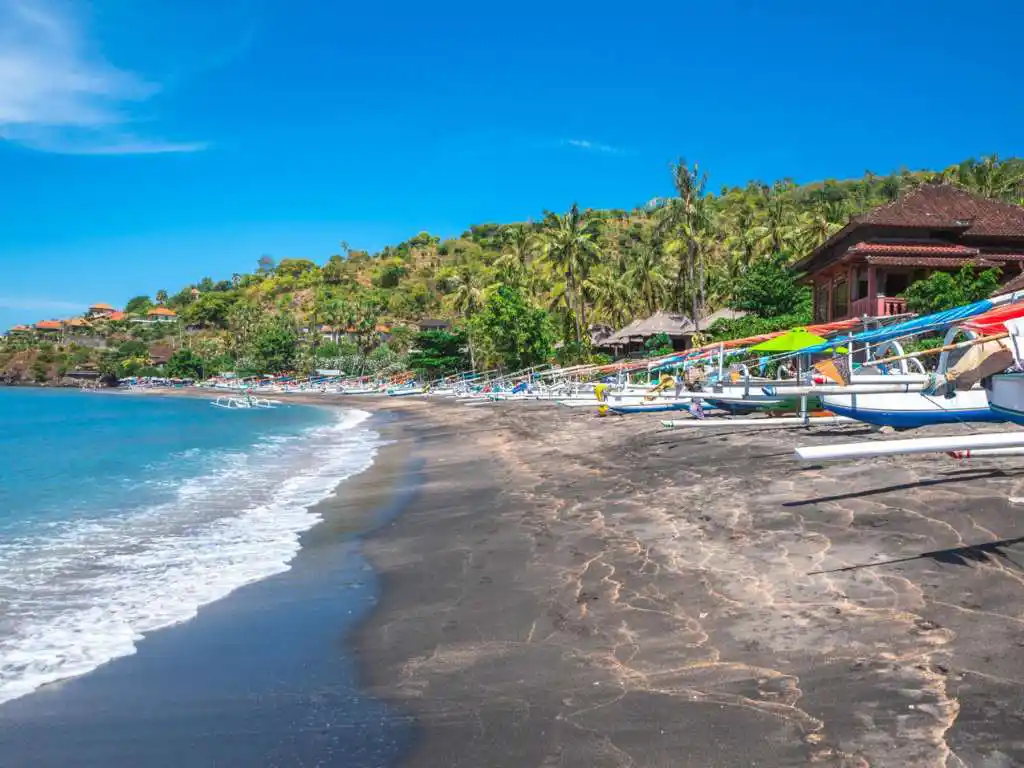
Amed’s ocean is completely different in character. The water is calm, sheltered, and exceptionally clear. The coral reef runs close to shore and is still in remarkably good condition. You can walk into the sea from the black volcanic beach and find yourself snorkeling within minutes — no boat, no equipment hire required, no planning. For diving, Amed is one of East Bali’s best access points, including for the famous wreck of the USAT Liberty in nearby Tulamben.
There are no real waves to speak of in Amed. If surfing is the reason you’re choosing a Bali base, this matters. But for everyone else — swimmers, snorkelers, divers, or simply people who want a beautiful and quiet sea to be near every day — Amed’s water quality and accessibility is exceptional.
Mood & Prices
Same chill energy. Very different price tags.
This is where Amed and Kedungu share the most common ground.
Both places have a genuinely unhurried atmosphere. No traffic pushing through the village. No rush-hour energy. No sense that everyone around you is on a tightly scheduled itinerary. Life in both places tends to move at the pace of the tide.
But Kedungu’s proximity to Canggu means its prices have followed Canggu’s trajectory. Rentals in Kedungu sit close to Canggu levels — which means they’re substantially higher than what you’ll find in Amed. A villa or long-term rental that costs a certain amount in Kedungu will often cost significantly less in Amed for a comparable property — sometimes half, sometimes less.
Food and daily expenses follow the same pattern. Amed’s cost of living is low in a way that’s increasingly rare in Bali. Warungs are affordable, accommodation is affordable, and there’s simply less to spend money on — which can feel limiting or liberating, depending entirely on what you’re after.
Kedungu offers the chill mood at a higher price. Amed offers the chill mood, plus the isolation, plus the better water — at a significantly lower cost. The trade-off is the distance from everything else.
The Honest Answer
Amed vs Kedungu: who belongs where?
Kedungu makes more sense if surfing is central to your life in Bali, if you want the slower vibe without fully disconnecting from Canggu’s infrastructure, or if you need easier access to the south for work, school, or regular errands.
Amed makes more sense if you want to genuinely step back from all of it — lower costs, crystal water, diving and snorkeling instead of surfing, and the kind of remoteness that isn’t just an aesthetic but a reality. Amed is not convenient. That’s not an accident. It’s exactly what makes it work.
If you want to escape Bali’s busiest areas but keep a safety net nearby, Kedungu is the more comfortable choice. If you’re ready to fully commit to a different pace — and genuinely don’t need what’s three hours away — Amed is the more complete one.
More Comparisons
How does Amed compare to the rest of Bali?
Amed vs Canggu
The full contrast between Amed’s remote east coast and Bali’s most developed expat destination.
Amed vs Ubud
Jungle and ceremony vs coast and calm. How Amed and Ubud compare in culture, climate, and daily life.
All comparisons →
Back to the full Amed vs other places in Bali overview.